
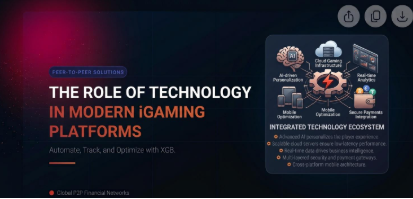
The iGaming industry has evolved significantly as technology has become an increasingly important part of how online gaming businesses operate. A modern iGaming platform is no longer simply a website containing games. Behind the user interface is a combination of software infrastructure, APIs, databases, payment systems, analytics, security tools, and third-party integrations working together in real time.
For operators and businesses planning to enter the iGaming market, understanding the technology behind an online gaming platform is essential. The quality of the underlying infrastructure can influence everything from game loading and account management to transaction processing, data analysis, scalability, and overall user experience.
The article is sponsored by XGB รับเปิดเว็บพนัน
Modern iGaming platforms commonly rely on APIs to connect different systems. These integrations can allow operators to connect game providers, payment services, customer management tools, analytics platforms, and other technologies without developing every component independently. Industry technology guides describe API เว็บพนัน as a central part of connecting games, payments, compliance tools, and other platform services.
What Makes Up a Modern iGaming Platform?
An iGaming platform typically consists of several technological layers rather than a single piece of software.
The front end is the part that users interact with. It includes the website design, navigation, game lobby, account area, promotions, mobile interface, and other elements of the customer experience.
Behind the front end is the platform infrastructure. This layer manages user accounts, balances, game sessions, transactions, configuration, reporting, and communication between different systems.
Another important component is the integration layer. This is where APIs connect the platform with external services such as game providers, payment gateways, verification services, analytics systems, and other technology partners.
When these components are properly connected, users can experience a relatively seamless environment even though many different technologies may be operating behind the scenes.
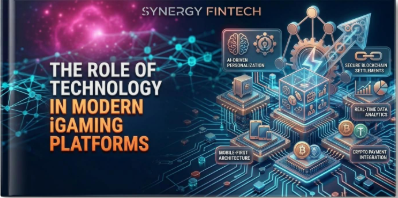
API Integration as the Connection Layer
Application Programming Interfaces, commonly known as APIs, are fundamental to modern iGaming technology.
An API allows two software systems to communicate according to predefined rules. In an iGaming environment, an API can be responsible for actions such as launching a game, sending player information, processing wallet transactions, receiving game results, or communicating with external services.
This architecture allows an operator to build a platform without developing every game or technology component internally.
Game aggregation is another important application of API technology. Instead of creating individual technical connections for every game studio, an operator may use an aggregation layer that provides access to multiple providers through a unified integration. Industry guides describe this model as a way to connect large game catalogues through a single integration layer.
For businesses, this can simplify technical management and make it easier to expand the available content over time.
Game Technology and Content Management
Game content is one of the most visible elements of an iGaming platform, but managing game content involves more than displaying game titles on a webpage.
The platform needs to know which games are available, which provider owns each title, how the game should be launched, which currencies and languages are supported, and how game transactions are communicated.
A game integration can therefore involve multiple technical processes, including authentication, game launching, player sessions, wallet communication, bet transactions, win transactions, and rollback handling.
A well-designed platform can centralize these processes so that the operator does not have to manage every provider connection independently.
This also creates opportunities for better content management. Operators can organize games by category, provider, popularity, campaign, or market according to their business requirements.
Payment Technology and Digital Transactions
Payment infrastructure is another critical component of an iGaming platform.
A player may expect a deposit or withdrawal process to be straightforward, but several systems can be involved behind the scenes. The platform needs to communicate with the payment service, update the player’s balance, record the transaction, and maintain an accurate financial history.
API-based payment integration allows these systems to communicate automatically.
A centralized architecture can also help businesses monitor transactions and identify problems more efficiently. For example, if a transaction fails or requires additional processing, the platform can record the relevant status rather than relying on manual updates.
Payment technology therefore affects both operational efficiency and the overall customer experience.
Data and Analytics in iGaming
Data has become one of the most valuable resources for modern iGaming businesses.
Every interaction with a platform can generate useful information. This may include registration activity, game preferences, session behavior, transaction history, campaign performance, and customer engagement.
Analytics technology allows businesses to convert this information into useful insights.
Instead of relying only on general traffic numbers, an operator can evaluate which games attract attention, which campaigns generate engagement, which customer segments are most active, and how users interact with different areas of the platform.
This information can support decisions about content, marketing, promotions, customer experience, and platform development.
The growing importance of analytics also means that iGaming platforms need a data architecture capable of collecting and organizing information consistently.
Automation and Operational Efficiency
Automation is another major area where technology can improve iGaming operations.
A modern platform can automate repetitive processes such as account management, reporting, notifications, transaction updates, campaign administration, and other operational tasks.
Automation reduces the amount of manual work required by internal teams. It can also reduce the risk of human error when the same process needs to be repeated thousands of times.
For example, instead of manually updating information across several systems, an integrated platform can allow one event to trigger the relevant updates automatically.
This becomes increasingly important as an operator grows. A workflow that is manageable with a small number of users may become inefficient when the platform handles significantly more activity.
Security and Infrastructure
Security should be considered from the beginning of platform development rather than added as an afterthought.
An iGaming platform can handle sensitive account information, transaction records, authentication data, and operational information. As a result, the underlying infrastructure needs appropriate security controls.
API authentication, encrypted communication, access management, transaction logging, monitoring, and system-level controls can all contribute to a more secure architecture.
Businesses should also evaluate how technology partners handle access permissions, system updates, incident management, and data protection.
A secure platform is not simply about preventing unauthorized access. It is also about maintaining system reliability and ensuring that important operations continue to function correctly.
Mobile Technology and User Experience
Mobile devices have changed how users interact with online services, and iGaming platforms are no exception.
A modern platform needs to consider mobile usability from the beginning. Responsive layouts, fast loading, intuitive navigation, and touch-friendly interfaces can influence the overall user experience.
Mobile technology also increases the importance of performance optimization. A platform may have excellent functionality, but if pages take too long to load or games are difficult to access on smaller screens, users may leave before completing their intended activity.
This is why front-end development and back-end infrastructure need to work together.
Scalable iGaming Architecture
Scalability is one of the most important considerations for businesses planning long-term growth.
A platform should not only work when activity is low. It should also be capable of handling increased traffic, more users, additional games, new integrations, and expanding operational requirements.
API-driven architecture can help provide flexibility because individual components can communicate through defined interfaces rather than being permanently tied together.
This allows businesses to add or replace certain services without rebuilding the entire platform.
For example, an operator may initially work with a particular game provider and later add additional providers. A well-designed integration architecture can make this expansion easier to manage.
Why Technology Matters for iGaming Businesses
The technology behind an iGaming platform directly affects how efficiently the business can operate.
A platform with strong integrations can connect games, payments, analytics, customer management, and operational tools within a more organized environment.
A platform with weak architecture may experience duplicated work, inconsistent data, difficult maintenance, and expensive technical changes later.
This is why choosing an iGaming technology partner should involve more than comparing visual designs or the number of features advertised.
Businesses should evaluate the architecture, integration capabilities, scalability, support, security practices, data management, and ability to adapt to future requirements.
The Future of iGaming Technology
The future of iGaming technology is likely to involve greater automation, deeper analytics, more sophisticated personalization, stronger API ecosystems, and increasingly connected platform architectures.
Artificial intelligence and machine learning may also become more useful for areas such as recommendation systems, customer segmentation, fraud detection, operational analytics, and automated support.
However, technology should always support the business model rather than becoming a collection of disconnected features.
For businesses entering the iGaming sector, the strongest approach is to build an infrastructure where different technologies work together.
An iGaming platform is ultimately an ecosystem. Games, APIs, payments, data, security, customer management, and analytics all contribute to the final experience.
With the right technology foundation, businesses can create a platform that is easier to manage today while remaining flexible enough to evolve as the market changes.

Layla is the founder of Charm Messages, where she writes birthday wishes, love messages, greetings, quotes, and special occasion messages for readers worldwide.


Leave a Reply
You must be logged in to post a comment.